Cognomina secrecy oath
The Reincarnationist PapersThe Cognomina secrecy oath is both a safeguard against outside exposure and a condition of belonging to a society whose members carry memories across successive lives. It regulates what members may tell outsiders, how newcomers gain access to the group, and what duties follow acceptance. Its force is visible not only in Cognomina’s formal rules but also in the history that produced them and in the choices the oath later requires of Evan Michaels.
Historical origin and purpose
The rule is rooted in a catastrophe from the society’s early history. Around the turn of the first millennium, after the group had relocated to what is now Switzerland, seven members had accumulated a fortune comparable to that of nearby kingdoms. When one of the oldest members became trustee, he disclosed the Cognomina’s existence to surrounding villages without the others’ permission. He later said that he hoped to establish a kingdom in which the seven could rule as a royal family across successive incarnations.
The disclosure instead made the group vulnerable. Stories about tattooed members spread, and within a fortnight villagers had killed all seven and looted the treasury. The secrecy rule became a tradition in response. It is therefore more than a preference for privacy: within the society’s own account, it is a lesson about how quickly public knowledge can turn into collective danger. The episode also makes the trustee’s unilateral action consequential. He tried to convert the group’s wealth and continuity into public authority; the outcome was the destruction of the entire known membership.
The rule has a practical rationale as well. Poppy explains to Evan that members’ long lives and accumulated memories leave them with little in common with ordinary people, who cannot readily understand their experience. The resulting distance reinforces the boundary between members and outsiders, while the historical precedent gives that boundary a specific, institutional reason. Secrecy protects the group from exposure, but it also limits the possibility of being understood beyond it.
Disclosure and the path to membership
When Evan asks Poppy to tell him about the other members, she refuses. Her refusal is not presented as a personal withholding of information: the members are sworn to secrecy, and their identities are not shared with a candidate until that person has been accepted. At the time of this explanation, Poppy describes the society as having twenty-eight members. Evan’s eagerness to learn more meets a boundary that the group applies collectively, rather than an answer that his personal rapport with Poppy can bypass.
Acceptance depends on the Ascension, the identity trial required in each successive incarnation before a person can reenter the Cognomina. A candidate must persuade a panel that the new body is the same person who belonged in an earlier life, using names, dates, places, and other details that can be verified. Poppy describes an older practice in which the candidate’s return in a later life and recognition of the person who had tested them served as proof. The procedure has changed, but the underlying problem remains: membership and access to members’ identities depend on establishing continuity across lives. Poppy offers to act as Evan’s advocate, but the offer does not erase the test or the secrecy surrounding it.
The oath thus establishes a graduated boundary of knowledge. Before acceptance, a candidate can be told about the society and its process but cannot receive the members’ identities. After acceptance, the candidate enters a reciprocal community in which secrecy is an obligation shared by all. This structure protects identities while making verified belonging, rather than curiosity or personal acquaintance, the basis for fuller disclosure.
Obligations and shared enforcement
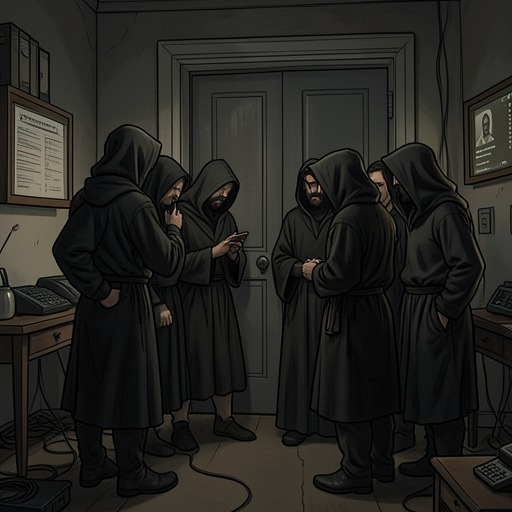
At Evan’s admission, the Cognomina sets out secrecy as one obligation among several binding conditions. Members must conceal the society’s existence, its condition, and its collective. They must introduce new palingenesists to the Cognomina, answer summonses to serve as judges or jurors, and undergo an identity trial in each subsequent incarnation in order to reclaim their assets. They must also take turns administering the society’s funds and activities and pledge enduring allegiance to its members.
The financial requirements extend that bond beyond a member’s lifetime. Members must leave their assets to the Cognomina; upon death, ten percent goes to a community fund for expenses and maintenance of the society’s facilities. The fund is accounted for at Sumerfest. In this arrangement, the secrecy oath is embedded in a wider system of reciprocal duties: members contribute money, service, introductions, judgment, and loyalty, while the society preserves their place and property through successive incarnations. Evan accepts these conditions by nodding when they are presented to him.
The obligations also shape conduct between members. In a narrated episode set at Mocha, a Sherif recalls Ramsay arriving at the port as a military commander. Although the two men face one another in opposing roles, the account says that it does not come to a fight and stresses that both have taken the oath. The episode connects the rule to a conflict beyond the society’s meetings: shared membership remains relevant even when members encounter each other amid external political and military duties.
Consequences for Evan and the society
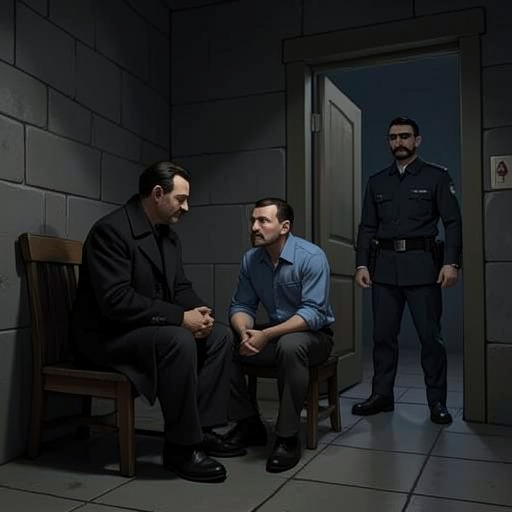
The oath later constrains Evan in a private and practical way. As he prepares to die in prison, he considers asking Reginald, who is due for release, to contact Ramsay. He decides that the secrecy oath he adopted with his tattoo prevents him from exposing Reginald to the truth. Instead, Evan writes his notebooks in Bulgarian so Reginald will not know what they contain. He asks him to keep them and, roughly eighteen years later, give the three notebooks to a young person who may arrive without knowing exactly why they have come. Reginald is to tell that visitor about Evan only if asked.
This arrangement shows the rule operating beyond a simple ban on naming the society. Evan can arrange for the notebooks to survive and be passed on, but he cannot explain their significance to the person he trusts with them. The language choice preserves the secret even as the notebooks are prepared for a future recipient. His plan turns a restriction into a carefully limited channel of transmission: the writings may travel, while the knowledge that would identify their place in the Cognomina remains withheld.
Across these episodes, secrecy protects the Cognomina from a repetition of its founding disaster, defines what a candidate may know before acceptance, and imposes obligations that continue to govern members’ choices outside the society. The rule creates solidarity among those who have passed the Ascension, but that solidarity depends on keeping outsiders at a distance. Evan’s notebooks make the cost especially clear: the oath can preserve the community’s boundary even when it leaves a trusted person unable to understand the message entrusted to him.